Best Dynamic vCard QR Code Tools
Compare the best dynamic vcard QR code tools for editable profiles, NFC sharing, scan tracking, lead capture, and CRM workflows.
A dynamic vcard QR code can keep your contact details current after your card is printed. But “dynamic” doesn’t always mean rich analytics or deep CRM support. Here are the best tools, with a clear fit for each type of user.
1. LetsConnect
LetsConnect is a strong fit for professionals who want an editable contact profile with NFC and QR sharing. We built it for people who need tap-to-share contact details without forcing a recipient to install an app.
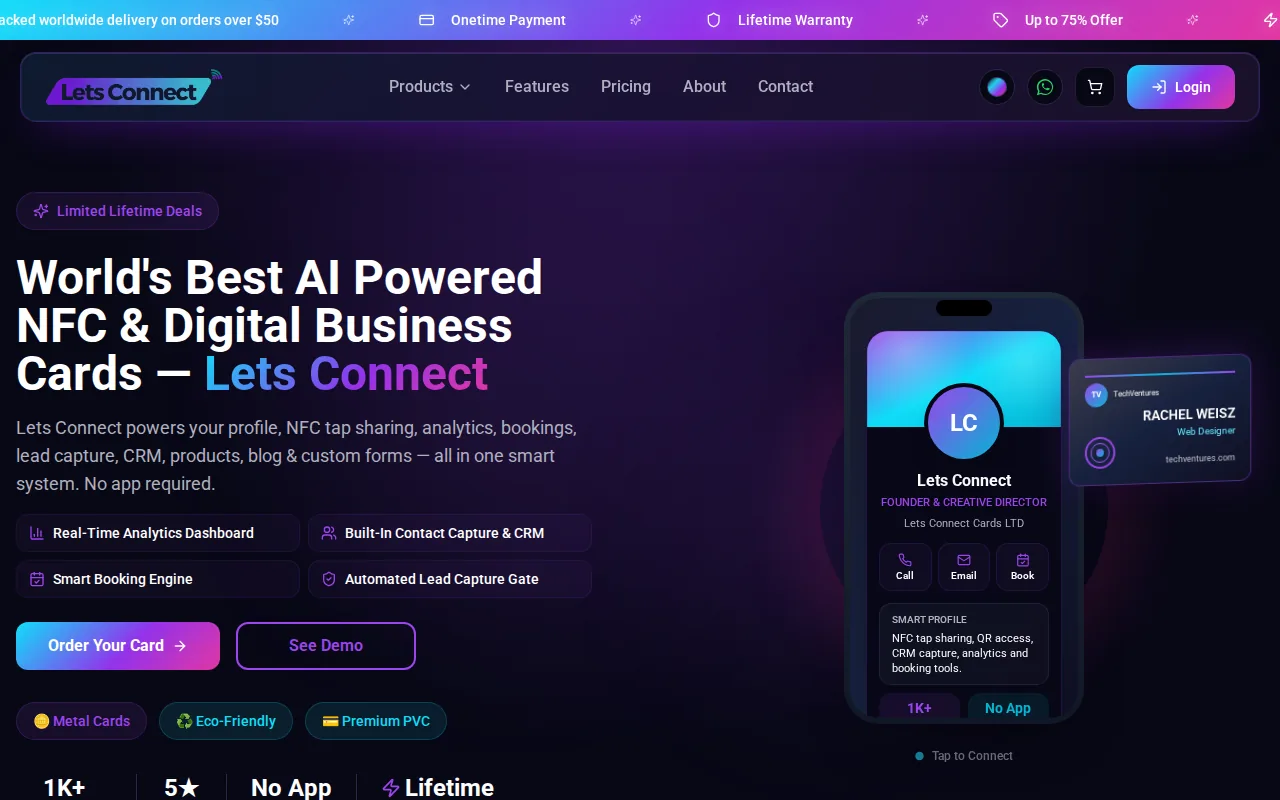
Our Premium NFC Digital Business Card lets you share contact details, social profiles, portfolio links, bookings, and lead-capture content. NFC means a tiny wireless chip that lets a nearby phone open your profile with a tap. The printed QR code gives people a simple fallback when they prefer to scan.
The strongest point is profile control. You can update the vCard through the dashboard any time. That helps when your title changes, a booking link moves, or your email address needs a quick fix. You don’t need to throw away every card already in circulation.
We also keep the basic handoff clear. The recipient opens your profile in a browser, with no app required. That matters at trade shows, meetings, and quick introductions where nobody wants to pause and search an app store.
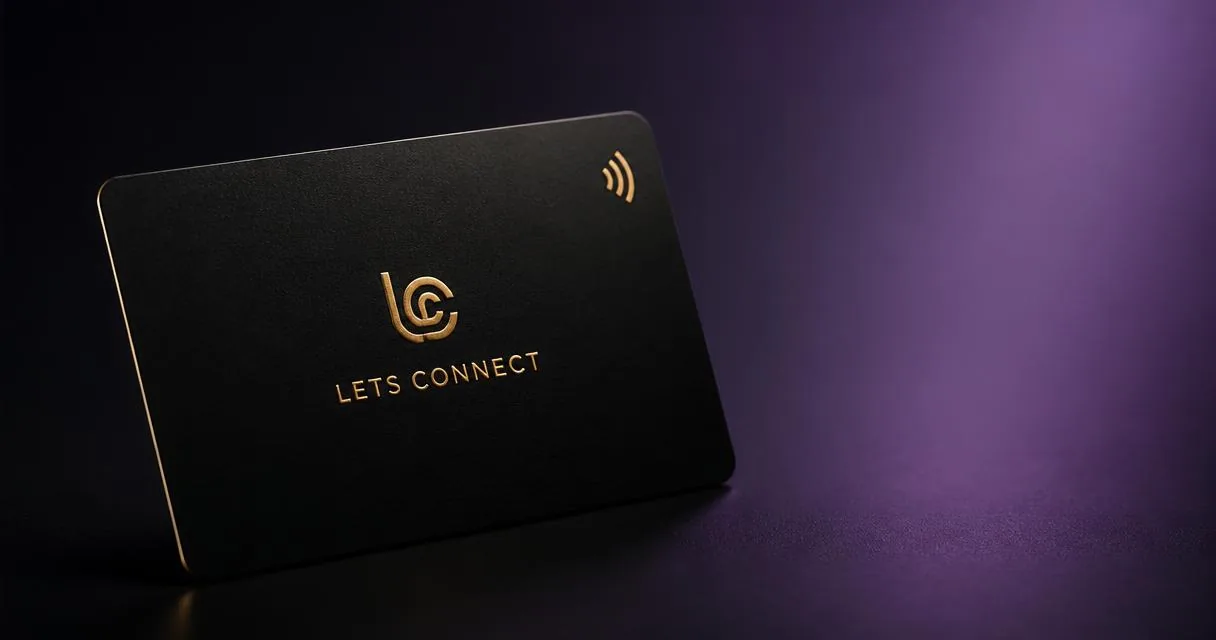
If you want a physical card with a QR fallback, the QR Code Business Card is the most direct place to start. Choose metal, premium PVC, or eco-friendly wood based on how you meet people and where the card will be used.
The trade-off is clear. LetsConnect focuses on a straightforward, always-updatable profile. The available product information does not claim advanced QR branding, scan analytics, or CRM integrations. If you need detailed campaign reports, check the tools lower on this list.
For most solo professionals and small teams, that restraint is useful. You get a live contact page, a physical card, and a low-friction way to share your details.
2. V1CE, premium NFC hardware with a one-time purchase
V1CE fits professionals who want premium NFC hardware with a one-time purchase and no subscription. It is a strong match when the physical card matters as much as the digital profile.
The appeal is simple. You buy the card once, then use NFC to share your details. That can suit an executive, consultant, or founder who wants a polished card without adding another recurring software bill.
A dynamic vcard QR code still needs a live destination behind it. That distinction matters here. A premium card can look excellent, but you should confirm how its QR destination is edited, what remains available after purchase, and whether scan data sits behind a paid tier.
Use V1CE when your main goal is a high-end physical networking card. It makes less sense if your team needs detailed reporting for each event or a shared lead workflow.
Before you buy, test the full exchange on both iPhone and Android. Tap the card. Scan the QR code. Then save the contact. A polished handoff still fails if the recipient cannot complete those last steps.
The one-time purchase model is the key decision point. If recurring software fees bother you, V1CE deserves a close look. If your priority is profile control plus a simple team workflow, compare it with LetsConnect first.
3. Popl, enterprise lead capture and CRM sync
Popl is aimed at enterprise event and sales teams that need lead capture at scale. Its free tier also makes it easier to test the basic workflow before a wider rollout.
This type of tool suits a sales team working a booth or running many face-to-face meetings. Instead of treating every exchange as a loose contact, the team can use a digital profile as the first step in a lead process.
Popl is a better candidate than a basic vCard tool when your concern is follow-up discipline. A QR scan can send someone to a profile or form, while the team thinks about what happens next. Does the rep follow up? Does a manager review the event? Does the lead move into the sales system?
Those questions matter more than the QR graphic itself. A dynamic code can change its destination after print, but a lead process still needs clear ownership. Set one person to check new contacts after each event. Define which fields the team must complete. Keep the form short enough for a busy booth.
Popl’s best-fit profile is an organization with a sales or event team, rather than one person who only wants to share an email address.
That caveat matters during procurement. Ask which systems connect, which fields map across, and whether the free tier includes the QR sharing functions you need. A free plan may help you test the experience, but it may not cover the full handoff.
Pick Popl when lead collection is the center of the project. Pick LetsConnect when the main job is a clean, editable profile with a physical NFC card.
4. Mobilo, premium NFC cards with editable QR profiles
Mobilo suits users who want a premium physical NFC card with an editable QR profile. It is built around the idea that a printed code should keep working after your contact details change.
Its documented QR workflow includes an editable dashboard, scan tracking, and real-time analytics. The QR code points to a dynamic URL, so you can update the profile without replacing the printed card. That is useful when a team member changes roles or an event campaign needs a new destination.
The analytics angle is more specific than a vague “track scans” claim.
Mobilo also makes sense when you want both tap and scan access. NFC handles the fast handoff for compatible phones. QR gives people a familiar route when they want to use their camera.
There are still operating risks. A dynamic QR code depends on a redirect service and a live profile. Check how access is managed, what scan limits apply, and what happens if your plan changes. You should also test the printed code at its final size before ordering a large batch.
Choose Mobilo when scan visibility is worth paying for. Its hardware and subscription model may feel like too much for a solo user who only needs an editable contact page.
5. Blinq, AI-powered team features and CRM integration
Blinq is aimed at enterprise teams that want AI-powered features and integrated CRM workflows. It also has a free tier, though the free experience includes branding.
This option belongs on a team shortlist when profile management is shared across many people. A manager may need to keep names, roles, and brand details consistent while each person has a separate digital card.
The main question is how much control comes with the plan you choose. A free tier can prove whether staff will use a digital card. But visible branding may not fit a client-facing campaign, and advanced team features may require an upgrade.
A dynamic vcard QR code is only useful if the profile stays accurate. Set a review owner for each group. When someone changes jobs or leaves the company, remove or redirect the profile quickly. This small governance step prevents old cards from sending prospects to stale contact details.
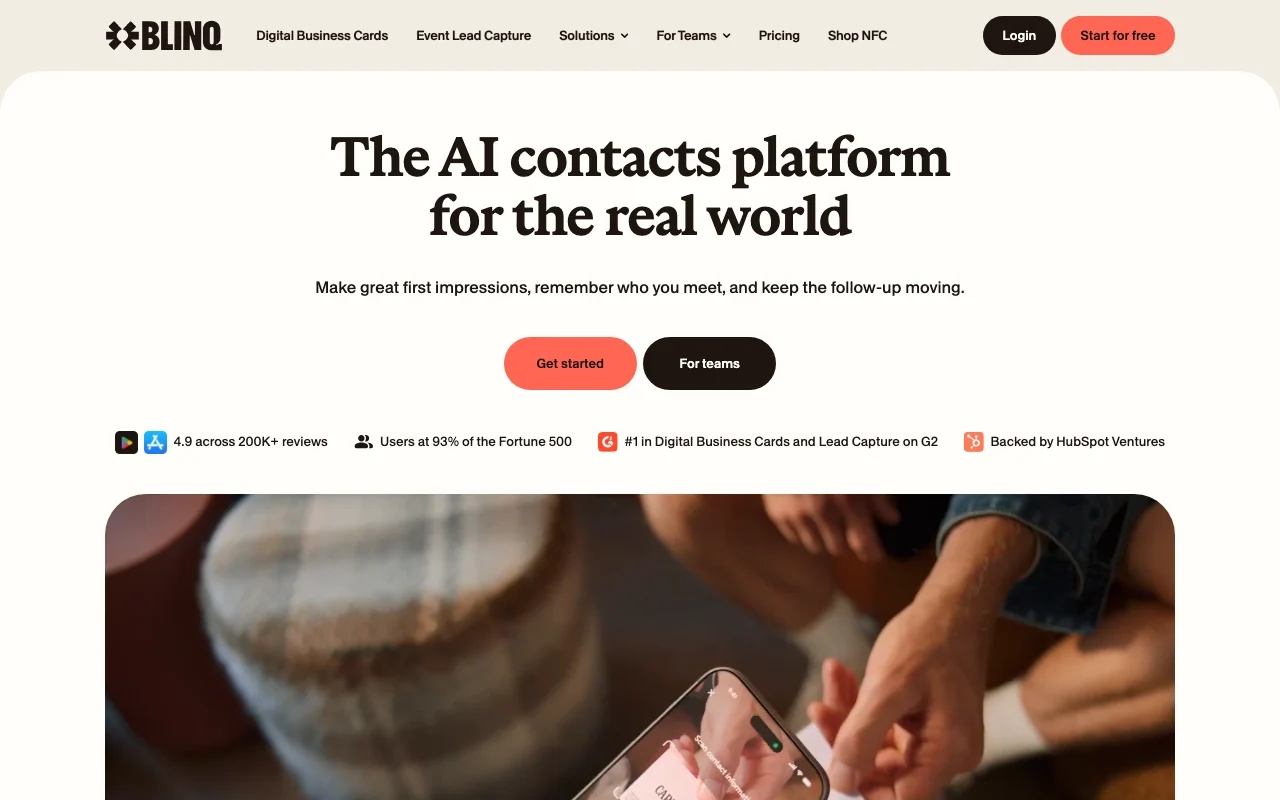
Blinq is worth considering when team control matters more than a premium physical card. For a simple personal card, LetsConnect may be easier to manage.
6. HiHello, detailed engagement analytics and lead attribution
HiHello is the strongest fit for companies that want detailed engagement reporting and lead attribution. It tracks events such as engagement, contact growth, lead attribution, and campaign activity across the company.
That wider view helps a marketing or sales manager connect sharing activity with follow-up work. For example, a team can review whether a campaign produced new contacts, then compare that activity with the next stage in its sales process.
HiHello also documents direct CRM lead sync. That is useful when the digital card is part of a wider system rather than a stand-alone profile. A new contact can move into the CRM instead of staying in one employee’s phone.
The profile update model is easy to understand: change the details once, then update every place that points to the profile. That reduces the risk of one old QR code sending people to an outdated role or link.
Still, analytics can create noise if nobody owns the report. Decide which events matter before you launch. Scan count may help with reach, but lead attribution tells you more about business value. Contact growth can show interest, while campaign activity can show where the interest came from.
If you need a broad company view, HiHello deserves a serious review. If you only need a live vCard and a physical card for personal networking, its wider reporting model may be more than you need.
For context, a vCard is a standard electronic contact format. It stores and exchanges contact information, which explains why these profiles can move details into a phone’s address book.
Dynamic vCard QR code comparison table
The table below focuses on the decision that usually matters most: what happens after you print or share the card. A tool can have a dynamic destination without giving you deep brand control or useful reports.
| Tool | Best fit | Free tier | Update or tracking angle | Main caution |
|---|---|---|---|---|
| LetsConnect | Professionals needing an editable NFC and QR card | — | Update the vCard any time through the dashboard | Advanced QR analytics are not documented |
| V1CE | Premium NFC hardware with one-time purchase | No | Best suited to a premium physical card workflow | Confirm analytics and QR edit controls |
| Popl | Enterprise events and sales teams | Yes | Lead capture and CRM sync at scale | Confirm CRM field mapping and plan limits |
| Mobilo | Premium card users who need scan insight | No | Editable QR profile, scan counts, locations, and devices | Hardware and subscription costs apply |
| Blinq | Enterprise teams with AI and CRM needs | Yes | Team features and integrated CRM positioning | Free tier includes branding |
| HiHello | Companies measuring engagement and attribution | — | Tracks engagement, contact growth, attribution, and campaigns | Best value comes from a managed company workflow |
NFC and QR codes solve slightly different problems. NFC is a short-range tap, while QR works through a phone camera. NFC is short-range wireless communication, which is why an NFC card works best during a close, face-to-face exchange.
For a simple contact card, start with LetsConnect. Move toward Mobilo or HiHello when scan data becomes a reporting need. Choose Popl or Blinq when your company needs a team lead workflow.
Frequently asked questions
What is a dynamic vCard QR code?
A dynamic vCard QR code points to an editable digital profile instead of storing fixed contact details inside the printed pattern. You can change the profile after printing, so a new email address or job title does not require a new card. The exact analytics and branding tools depend on the provider and plan.
Can I update a QR code after printing?
Yes, you can update a QR code after printing when it points to a dynamic profile or redirect. The printed pattern stays the same while the destination changes behind it. Always confirm that your provider keeps the redirect active under your plan, especially if the card will remain in use for years.
Are dynamic vCard QR codes free?
Some digital card tools have free tiers, but free access may exclude QR sharing, analytics, or remove provider branding. A free plan can work for a personal test. Teams should check the upgrade rules before printing cards, since changing the plan later may affect features tied to the QR profile.
Can a dynamic vCard QR code track scans?
Yes, some tools track scans, but the level of detail varies. A provider may show only a general scan count, while another may report location, device type, campaign activity, or lead attribution. Treat tracking as a separate buying decision from editability. A QR code can be dynamic without giving you useful reports.
Should I use NFC or a QR code on a business card?
Use both when you want the fastest handoff plus a broad fallback. NFC lets someone tap the card, while a QR code helps people who prefer scanning or whose phone does not respond to the tap. LetsConnect combines both paths, so you can share through NFC while keeping the printed code available.
Conclusion
LetsConnect is the best starting point for professionals who need an editable contact profile with NFC and QR sharing. If your team needs detailed attribution or CRM-led reporting, compare HiHello, Popl, Mobilo, or Blinq against those requirements. Start by testing the full scan, tap, and contact-save flow before you print your next batch.
Why Lets Connect is the best digital business card
- Free to start: a digital card with your own link and QR code, no card details needed.
- Pay once: no monthly fee for your card or your lifetime plan.
- The follow-up is built in: lead capture, a CRM, a card scanner, bookings, forms and review links in one dashboard.
- No app on either side: it opens in the browser on iPhone and Android.
Related articles
- Best Digital Business Cards in the UK (2026): 8 Compared on Price and Features
- UC Awards 2026: Why Lets Connect Was Named a Rising Star Finalist
- Our Aim: To Lead the Business Card Category Worldwide by 2028
- Going to The Business Show London? Don't Bring Business Cards
- Best NFC Tools for iPhone: 9 Cards and Apps
- Best Business Card Apps for Professionals