
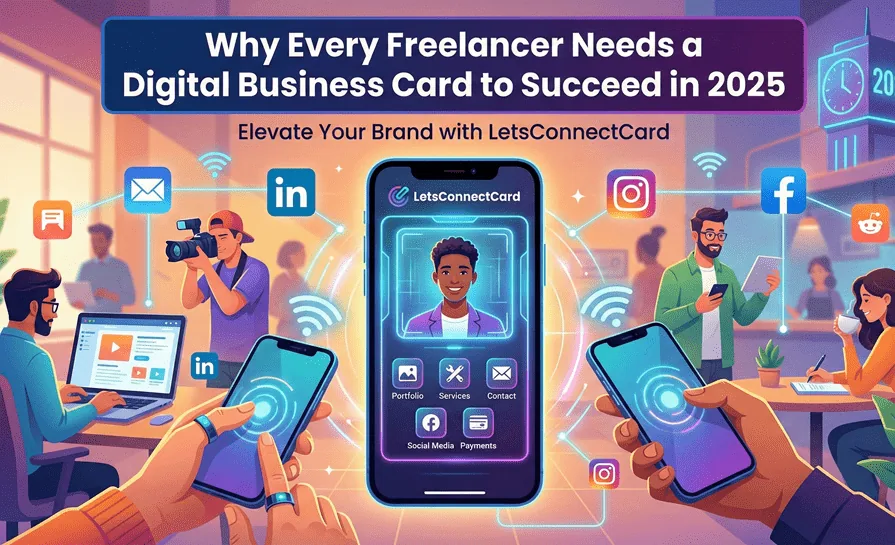
For a freelancer, every conversation is a potential brief. The person you meet at a coffee shop, a coworking desk, a friend's wedding — any of them could be the next £5,000 project. A digital business card exists so you never lose that lead to a fumbled paper card, a forgotten email address or a "sorry, I'll send it later" that never happens. In 2026 it is not a nice-to-have; it is the difference between talking about your work and being hired for it.
Start with an NFC business card or a free digital business card profile — both suit solo freelancers.
Why paper fails freelancers specifically
Employees can lose a lead and still get paid on Friday. Freelancers can't. Paper cards fail freelancers in five specific ways:
- They show almost nothing. A logo, a name, an email — that's it. No portfolio, no rates, no booking link.
- They date instantly. New offering, new price, new phone number — reprint.
- They give no feedback. You don't know if anyone looked at it.
- They rely on the other person to act. Most won't.
- They project the wrong image. A crumpled card at the bottom of a bag undoes twenty minutes of good conversation.
A digital card fixes all five in one exchange.
What a freelancer's profile should include
Think of the profile as a mini-portfolio landing page rather than a contact card. The best-performing freelance profiles include:
- Hero: photo, name, one-line pitch ("I turn founder stories into VC decks", "Wedding photography in the Cotswolds")
- Primary CTA: book a 15-minute intro call via Calendly
- Portfolio strip: 6–9 thumbnails of your best work
- Rate signal: "Projects from £2,500" or "Day rate £750" — filters out bad-fit clients before they book
- Testimonial or two: 1–2 sentences with a client name and company
- Contact: WhatsApp, email, LinkedIn
If you specialise in a specific platform, add a dedicated social card — Instagram for visual work, LinkedIn for B2B consulting, TikTok for short-form creators, YouTube for long-form.
What the numbers look like
Here's a realistic view of switching for a solo freelancer:
| Item | Paper cards | Digital card |
|---|---|---|
| Annual cost (typical) | £60–£120 | One-off card + optional subscription |
| Reprints per rebrand | 1 batch | None |
| Analytics on who viewed | None | Full |
| Portfolio on the card | No | Yes |
| Book directly from card | No | Yes |
| Lead capture form | No | Yes |
For a working freelancer, the extra bookings from a clearer call-to-action typically pay for the card in a single project.
Realistic freelancer scenarios
Consultant at a networking event. You hand a metal card to a founder you meet in a queue. They tap, see your case studies, book a 15-minute call from the phone in their hand. You didn't need to remember to follow up.
Wedding photographer at a venue open day. You attach a QR business card to your business folder. Every venue coordinator scans it and lands on a gallery of your last five weddings. Two book you before the day ends.
Freelance developer at a conference. You share your card via NFC. The recruiter that receives it sees your GitHub, your rate range, and your Calendly. She books a call before her flight home.
In each case the card removed a friction that a paper card would have preserved.
Personal branding matters more than ever
Freelancers sell themselves before they sell services. A well-designed profile signals seriousness, aesthetic taste and professionalism before you have said a word. Our personal-branding guide for NFC cards walks through exactly how to structure the profile so it reflects your actual brand, and the ROI breakdown shows what the uplift looks like in practice.
Common freelancer mistakes to avoid
- Cramming every project onto the profile — pick your six best
- Hiding the "book a call" button below the fold
- Using a stock photo instead of a real headshot
- Not adding a rate signal (leads to too many "just curious" chats)
- Forgetting to update after a rebrand — even digital profiles need occasional love
See our full digital business card mistakes piece for the extended list.
Frequently Asked Questions
A profile URL is enough for online-only work. If you meet clients in person, the physical card is what makes the moment memorable — you cannot hand someone a URL.
A rate signal (a "starting at" or day-rate figure) is powerful — it filters mismatched enquiries and pre-qualifies budget. Full rate cards belong on the profile, not the printed card.
If most of your business comes from one platform, use a dedicated social card for it. Otherwise a standard NFC card with links to all your platforms in the profile is the safer choice.
Yes. The card holds only a URL and your profile lives online, so you can rebrand, add a portfolio piece or change your CTA any time without a reprint.
Yes — because remote work still involves the occasional conference, meet-up, wedding or coffee chat, and those in-person moments tend to be higher-conversion than a cold DM.
The bottom line
If your income depends on the next client saying yes, remove every step of friction between "we should talk" and "book a call". An NFC business card does exactly that.
Further reading: Smart business card ROI for professionals · Digital business card mistakes · Personal-branding guide for NFC cards


